
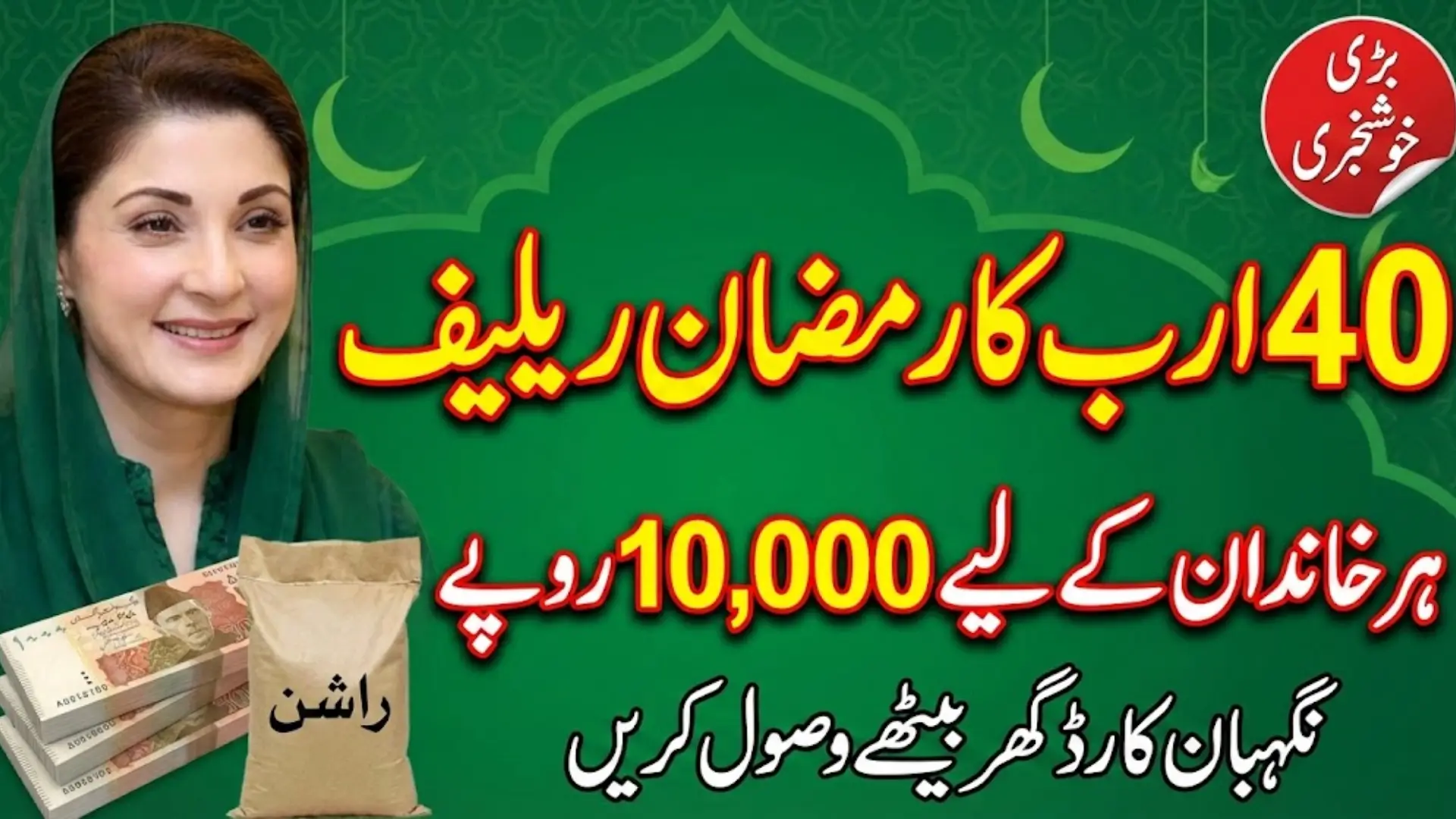
Rs 40 Billion Nighaban Ramadan Relief
Rs 40 Billion Nighaban Ramadan Relief government of Punjab has introduced a large-scale Ramadan welfare plan designed to ease the financial burden on low-income households during the holy month. With an allocation of Rs 40 billion, the initiative represents one of the most extensive public relief efforts announced for Ramadan support. The program combines direct financial assistance, subsidized food access, and organized community meals to ensure that essential needs are met when household expenses usually increase.
Across urban centers and rural districts, administrative teams have activated coordinated distribution systems to deliver assistance in a structured and transparent manner. The initiative aims to provide immediate relief while also strengthening public service delivery. Many families rely on seasonal support during Ramadan, and this program attempts to address both food affordability and cash flow challenges that arise due to inflation and rising living costs.
The scale of coverage indicates a province-wide welfare model rather than a limited pilot project. Authorities emphasize accessibility, affordability, and dignified support so that beneficiaries can observe Ramadan without excessive financial pressure.
You Can Also Read: Apni Zameen Apna Ghar Program Officially
Major focus areas of the program
- Large public funding dedicated to Ramadan welfare
- Direct support for low-income and registered households
- Food affordability measures across multiple districts
- Organized public service delivery at local levels
- Combination of financial aid and food security measures
Increased Financial Assistance to Support Household Expenses
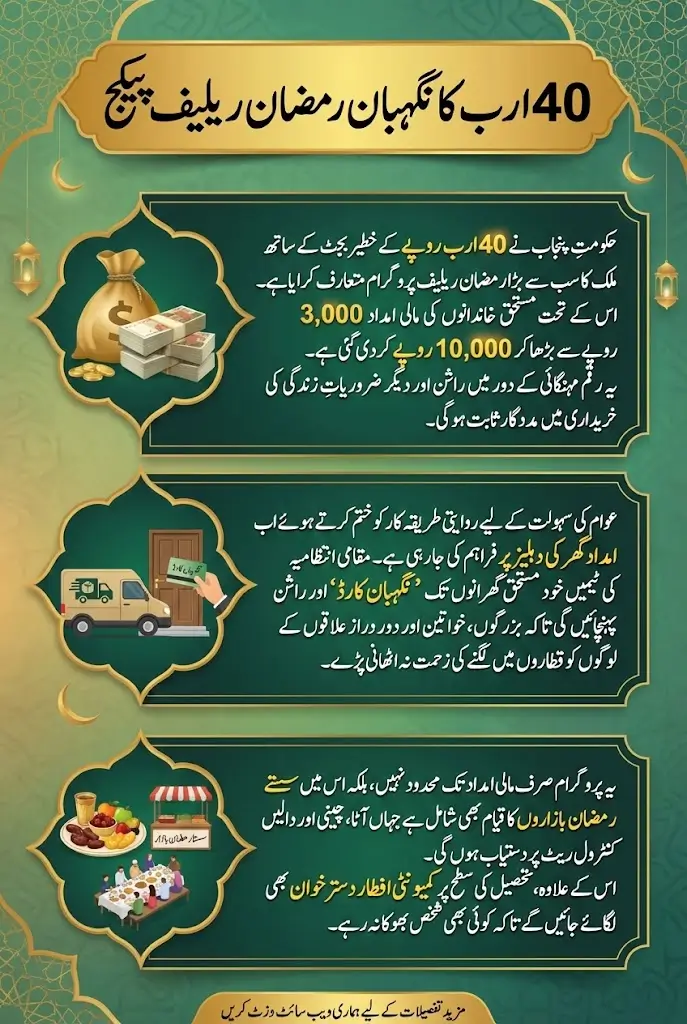
A key component of the relief initiative is enhanced financial assistance introduced under the leadership of Maryam Nawaz. The Ramadan support amount has been increased from Rs 3,000 to Rs 10,000, allowing families to manage food purchases, kitchen supplies, and basic utilities more effectively during the fasting month. The increase reflects policy adjustments in response to rising prices of essential commodities across Pakistan.
Financial assistance is distributed through designated support cards issued to verified households. This structured mechanism ensures that funds reach targeted beneficiaries rather than being dispersed through informal channels. By prioritizing verified families, authorities aim to maintain transparency while also expanding the reach of public welfare programs.
The support is particularly significant for daily wage earners, small-income workers, and vulnerable households whose expenses typically rise during Ramadan. For many families, this assistance helps stabilize household budgets and prevents reliance on borrowing for basic necessities.
You Can Also Read: Punjab Free Livestock Scheme Phase 2 Launched by Maryam Nawaz
Financial assistance features
- Rs 10,000 support provided per eligible household
- Structured distribution through relief cards
- Increased support compared to previous Ramadan assistance
- Coverage extended to registered low-income families
- Transparent targeting through verified data systems
Doorstep Delivery System Improves Access and Transparency
An important operational improvement in the initiative is the home delivery of relief cards. Instead of requiring beneficiaries to visit distribution centers, local administrative teams deliver assistance directly to households. This approach reduces transportation barriers and prevents overcrowding at public offices, which often discourages vulnerable citizens from seeking support.
The delivery system reflects a shift toward citizen-centered service design. By bringing welfare services directly to people’s homes, authorities aim to ensure equal access for elderly individuals, women, and those living in remote areas. The system also reduces administrative congestion and improves efficiency in public distribution.
Large-scale beneficiary coverage demonstrates the expansion of organized welfare delivery. By combining verified household data with local administration networks, the program attempts to ensure timely assistance while maintaining accountability.
You Can Also Read: PSER 8070 Registration Online 2026 for Ramzan Relief Package
Distribution system characteristics
- Direct home delivery of assistance cards
- Simplified process for eligible families
- Reduced travel and waiting time for beneficiaries
- Organized administrative coordination across districts
- Expanded reach to millions of households
Subsidized Essential Commodities Through Organized Ramadan Markets
To control food expenses during Ramadan, special subsidized markets have been established across districts. These markets provide essential commodities at reduced prices compared to open market rates, enabling families to purchase daily necessities within limited budgets. The regulated structure of these markets also supports price stability during a period of high demand.
Consumers visiting these markets find essential food items such as flour, sugar, pulses, cooking oil, and other kitchen staples at controlled prices. The organized setup improves transparency in pricing and ensures consistent availability of essential goods. Many families depend on these markets to maintain household food security throughout the month.
Beyond affordability, these markets also represent a coordinated approach to public welfare delivery. Local administration supervises operations to ensure that price reductions benefit citizens directly and that supply remains consistent across districts.
You Can Also Read: Punjab Launches Tell Maryam Helpline 1000
Public market support measures
- Discounted essential food items for Ramadan
- Organized market infrastructure across districts
- Large public reach benefiting millions of citizens
- Price regulation to prevent artificial inflation
- Improved access to basic kitchen commodities
Community-Based Iftar Arrangements Strengthen Social Support
In addition to financial and food assistance, the initiative includes organized community Iftar arrangements at the tehsil level. These daily meal programs are designed for individuals who may not have access to adequate food for breaking their fast. The arrangements provide free meals in an organized and respectful environment.
Community meal programs play an important role in social welfare by ensuring that vulnerable individuals receive support without stigma. Local volunteers and administrative teams coordinate meal preparation and distribution, reflecting collective responsibility and social solidarity.
The initiative also reinforces the cultural and spiritual spirit of Ramadan by promoting shared participation and inclusion. For many citizens, access to organized Iftar facilities ensures that financial limitations do not prevent them from observing the fast with dignity.
You Can Also Read: BISP Instalment Update 2026 Q3 Payments
Community meal program highlights
- Free Iftar meals organized daily at tehsil level
- Large-scale participation across districts
- Structured meal distribution system
- Inclusive environment for all citizens
- Strengthening of community welfare traditions
Province-Wide Impact on Household Stability and Food Security
The relief initiative is expected to reduce immediate financial stress for millions of families by combining income support with food affordability measures. Direct financial assistance helps households manage expenses, while subsidized markets ensure consistent access to essential commodities. Together, these components form a comprehensive welfare framework designed for Ramadan.
Economic pressure often increases during the holy month due to higher consumption needs and limited income stability for vulnerable households. By addressing both financial and food-related challenges, the program attempts to provide balanced support rather than isolated assistance. This integrated approach reflects a broader policy direction toward structured public welfare delivery.
The initiative also contributes to strengthening public trust in welfare programs by emphasizing transparency, accessibility, and wide coverage. For many families, the program offers both practical support and reassurance during a period of heightened financial demand.
You Can Also Read: Dhee Rani Program 2026 Online Registration
Key Components of the Nighaban Ramadan Relief Initiative
| Program Component | Type of Support | Coverage Scale |
|---|---|---|
| Ramadan Financial Assistance | Rs 10,000 per eligible household | 1 million registered families |
| Nighaban Card Support | Direct cash assistance per family | 4 million families |
| Subsidized Ramadan Markets | Discounted essential food items | Around 10 million citizens |
| Community Iftar Arrangements | Free daily meals at tehsil level | 2,000 individuals daily per tehsil |
Long-Term Significance of the Ramadan Welfare Model
The relief program demonstrates an expansion of organized social protection measures during Ramadan. By integrating financial assistance, food affordability, and community support into a single framework, the initiative establishes a comprehensive welfare model that may influence future public relief strategies.
The program also reflects growing emphasis on structured service delivery systems that prioritize accessibility and transparency. Through coordinated administrative mechanisms and province-wide implementation, authorities aim to ensure that support reaches deserving citizens efficiently.
You Can Also Read: CM Punjab Ramzan Nighban Program 10000