

Pakistani Passport Ranking
Pakistani Passport Ranking Henley Passport Index is considered one of the most trusted global rankings that measure the strength of passports around the world. It is prepared using official data from the International Air Transport Association (IATA) and reflects how many destinations a passport holder can enter without obtaining a visa in advance. For Pakistani citizens, this index matters because it directly affects ease of travel, costs, and opportunities abroad.
In the 2026 edition of the Henley Passport Index, Pakistan has received a noticeable improvement. After years of staying near the bottom of the rankings, the country has finally moved upward. This change may not instantly remove visa difficulties, but it signals that Pakistan’s global travel standing is slowly improving. For a country where international travel is often stressful and expensive, even small progress carries importance.
You Can Also Read: Xiaomi Redmi Note 15 Pro+
Pakistan’s Position in the 2026 Rankings
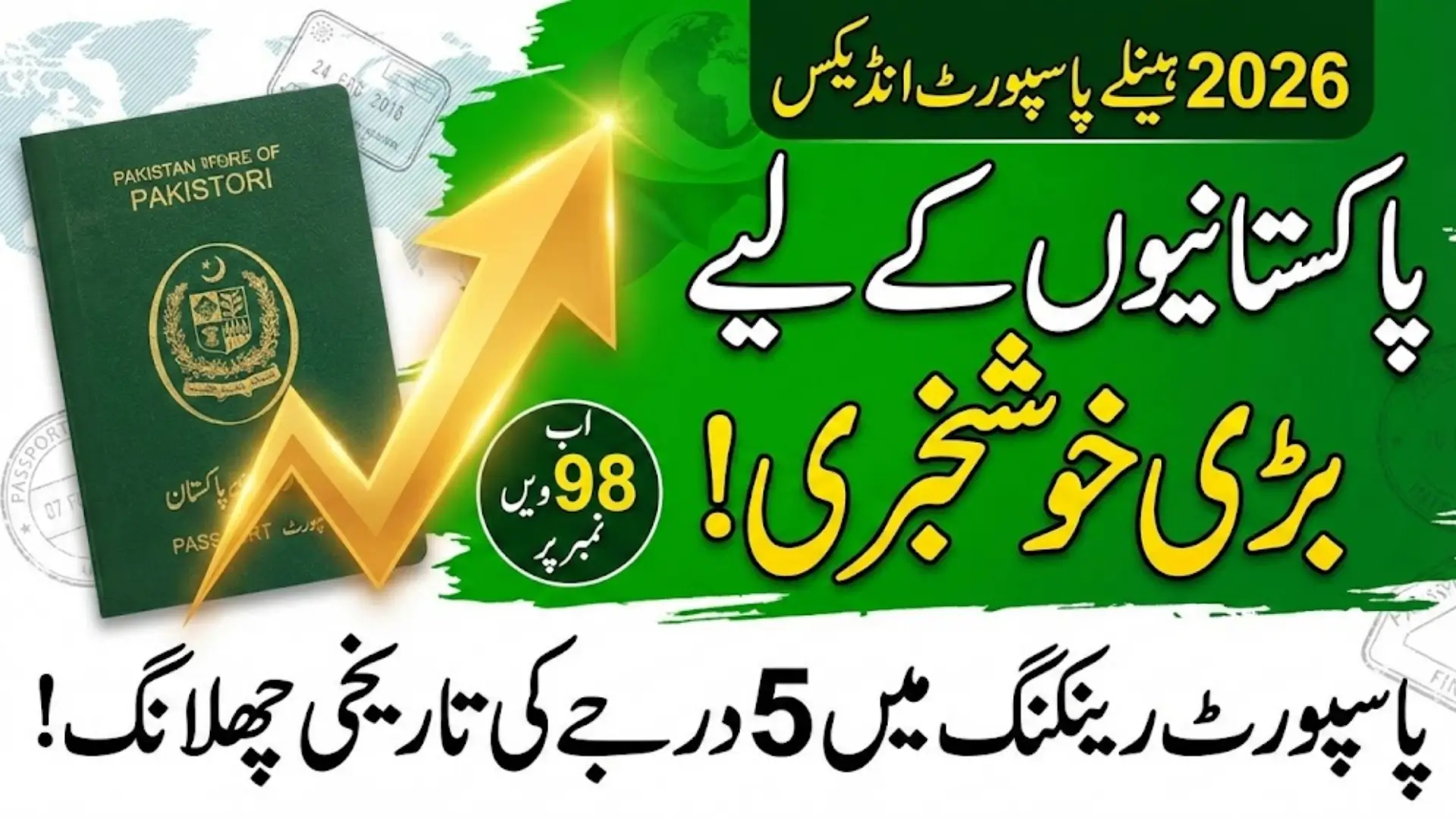
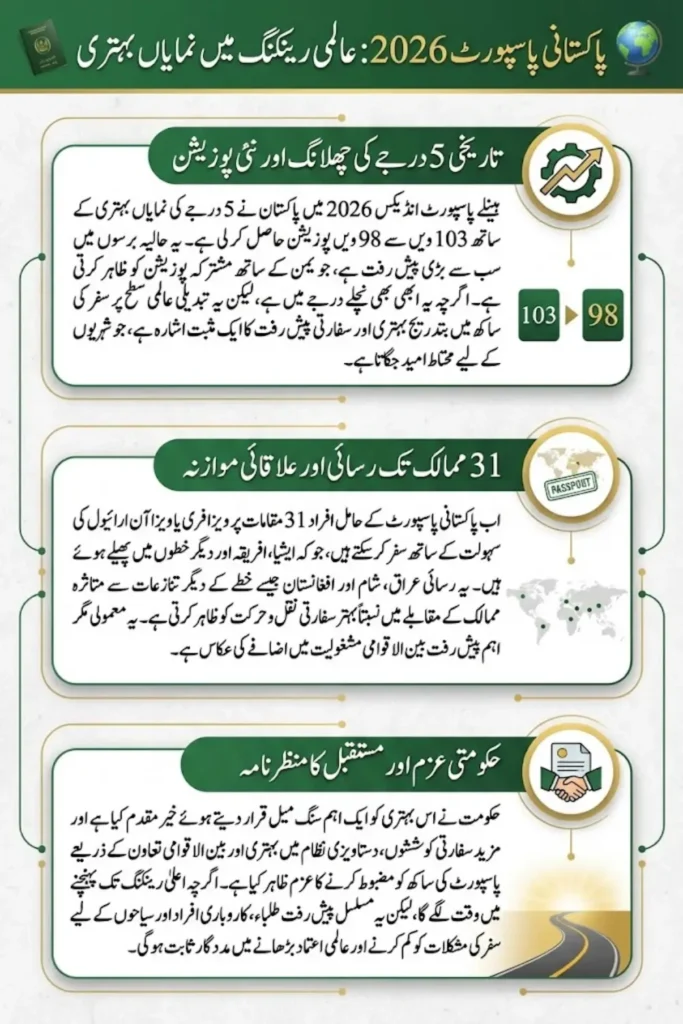
According to the newly released rankings, Pakistan’s passport now stands at 98th position, moving up from 103rd place in 2025. This five-rank jump is one of the strongest improvements Pakistan has seen in recent years. The passport now shares its position with Yemen, reflecting similar levels of travel access.
This improvement shows that Pakistan’s passport has gained slightly broader acceptance internationally. While it is still far behind powerful passports, the upward movement suggests gradual diplomatic progress. For ordinary Pakistanis, this ranking offers cautious optimism that travel restrictions may ease over time rather than becoming stricter.
From a broader perspective, such movement also improves Pakistan’s image globally. Passport rankings are often seen as indicators of stability, governance, and international trust.
You Can Also Read: Shabe Meraj 2026 In Pakistan Date
Comparison With Regional and Conflict-Affected Countries
In the 2026 index, Pakistan now ranks higher than several countries facing long-term instability. These include Iraq at 99th position, Syria at 100th, and Afghanistan at 101st. This comparison places Pakistan slightly ahead in terms of travel access among countries in challenging geopolitical environments.
While this does not mean Pakistan’s passport is strong, it does highlight relative improvement. In regions affected by conflict and political uncertainty, any upward movement reflects increased international engagement. This change also suggests that Pakistan is maintaining better diplomatic mobility compared to some neighboring states.
For Pakistani travelers, this ranking difference may not change visa outcomes overnight, but it does show that Pakistan is no longer slipping further down the global list.
You Can Also Read: Benazir Kafaalat 13500 ATM Withdrawal
Total Destinations Accessible to Pakistani Passport Holders
As of 2026, Pakistani passport holders can access 31 destinations either through visa-free entry or visa-on-arrival facilities. These destinations are spread across Asia, Africa, the Caribbean, and Oceania, offering limited but meaningful travel options.
This level of access helps Pakistanis who wish to travel for tourism, short visits, or urgent reasons without facing long embassy procedures. Although the number is modest, it still represents an improvement compared to previous years when access options were even more limited.
Key points about travel access in 2026 include:
- Total destinations accessible without prior visa approval: 31
- Combination of visa-free and visa-on-arrival options
- Coverage across four major global regions
- Mostly smaller or developing nations
You Can Also Read: BISP Web Portal Changes In 2026
Visa-Free and Visa-on-Arrival Destinations Overview
Pakistani passport holders currently enjoy visa-free access to several island and African nations, while many others offer visa-on-arrival. Visa-free travel is especially valuable as it allows entry without paperwork or embassy visits, reducing both cost and stress.
Visa-on-arrival access, although slightly more complex, is still far more convenient than applying in advance. It allows travelers to receive permission at the airport or border, which is helpful for short trips and urgent travel needs.
Below is a clear overview of Pakistan’s travel access in 2026:
| Access Type | Number of Countries | Examples |
|---|---|---|
| Visa-Free | 10 | Barbados, Rwanda, Dominica |
| Visa-on-Arrival | 21 | Maldives, Nepal, Qatar |
| Total Access | 31 | Asia, Africa, Caribbean, Oceania |
This access may not cover major Western destinations, but it still provides Pakistani citizens with practical international mobility options.
Government Reaction to Passport Ranking Improvement
Interior Minister Mohsin Naqvi welcomed the improvement in Pakistan’s passport ranking and described it as a “major milestone” for the country. His statement reflects official recognition of the importance of global mobility and international trust.
The government has also indicated that efforts will continue to improve Pakistan’s passport standing further. These efforts may include diplomatic engagement, improved documentation systems, and stronger international cooperation. While such promises take time to show results, acknowledging the issue is a positive step.
For citizens, government focus on passport strength is encouraging, especially for students, workers, and overseas Pakistanis who face visa challenges regularly.
You Can Also Read: BISP Wazaif New Payment
World’s Most Powerful Passports in 2026
At the top of the Henley Passport Index, Singapore continues to hold the number one position for the third consecutive year, offering visa-free access to 192 destinations. Japan and South Korea follow closely with access to 188 destinations each, while several European countries share the next positions.
This comparison highlights the significant gap between powerful passports and developing countries like Pakistan. However, it also shows that passport strength is not fixed and can improve over time through consistent diplomacy and stability.
Understanding this global gap helps put Pakistan’s progress into context rather than viewing it in isolation.
You Can Also Read: Ehsaas Program Registration 8171 NADRA
What This Improvement Means for Pakistani Citizens
For the average Pakistani, this improvement may not immediately simplify travel to Europe or North America, but it still carries long-term benefits. Improved rankings help build confidence among foreign governments and can gradually lead to relaxed travel policies.
This progress is particularly relevant for:
- Students seeking international exposure
- Tourists exploring visa-friendly destinations
- Business travelers attending short-term meetings
- Overseas Pakistanis planning flexible travel routes
Over time, such improvements can also encourage tourism, cultural exchange, and international partnerships.
You Can Also Read: LiveStock Card By Maryam Nawaz
Future Outlook for Pakistan’s Passport Strength
Pakistan’s passport still ranks among the lower tier globally, but the 2026 improvement shows that progress is possible. Continued diplomatic engagement, regional stability, and policy reforms can further strengthen travel access in coming years.
If the current momentum is maintained, Pakistan may gradually gain access to more destinations. While reaching top rankings will take years, consistent improvement can significantly ease travel challenges for citizens.