

New Federal Rules Reshape Student Loan Repayments
New Federal Rules Reshape Student Loan Repayments Starting July 1, 2026, major changes will take effect in federal student loan repayment rules, impacting millions of borrowers. These new regulations aim to simplify repayment, make it income-driven, and reduce the financial pressure on students and graduates. Borrowers who are unprepared may face unexpected challenges, making early awareness and planning crucial.
For students pursuing higher education, especially graduate programs, loans can become a long-term financial burden. Many students in the United States accumulate debts that can reach six figures, which affects their ability to focus on studies, start careers, or plan for the future. Even for Pakistani students considering studying abroad, understanding these rules early is essential to avoid financial stress.
Financial experts recommend that all borrowers, current and future, review their loans, check repayment options, and prepare for changes well before July 2026. Early planning can ensure smoother transitions and prevent repayment surprises.
You Can Also Read: Oppo Reno 15 Pro Price In Pakistan
The Current Challenges of Student Debt
Student debt has long been a challenge for higher education students. For example, UNLV graduate student Emmett Lovett has accumulated nearly $90,000 in loans, and this amount could increase if he pursues a PhD. Graduate students often face higher borrowing levels, making repayment more complicated and stressful.
In Pakistan, families are familiar with education-related expenses, but borrowing for overseas studies is becoming more common. High-interest rates, fluctuating exchange rates, and limited income make managing student loans a critical issue. Many borrowers struggle to balance repayment while pursuing academic goals, which can affect career and life planning.
- Graduate-level loans are typically larger than undergraduate loans.
- Long-term debt can delay major life decisions like buying property or starting a family.
- Careful planning and awareness of repayment rules are crucial for financial stability.
You Can Also Read: Benazir Taleemi Wazaif Payments 2026
Key Changes in the 2026 Federal Loan Rules
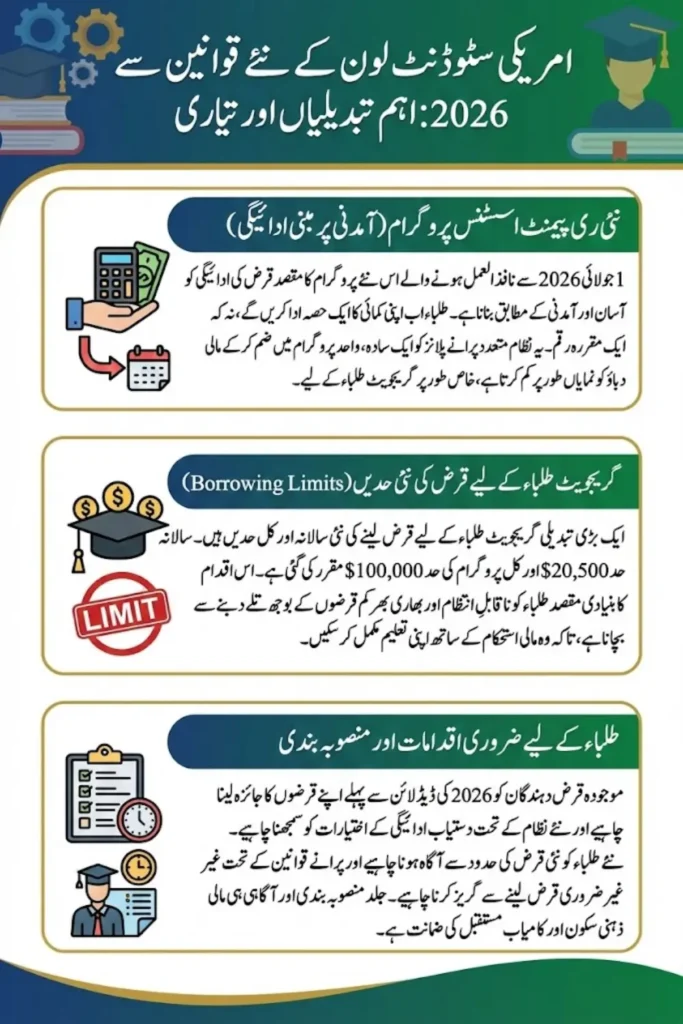
The new rules, effective July 1, 2026, introduce a Repayment Assistance Program that will apply to all new federal student loans. This program is designed to simplify repayment and make it more predictable for borrowers.
Under this new system:
- Monthly payments will be income-driven, meaning borrowers pay a portion of what they earn rather than a fixed amount.
- Multiple repayment plans will be combined into a single program, making the process easier to understand.
- The risk of overwhelming debt is reduced, especially for students in graduate programs.
Most existing repayment plans will no longer be available for new borrowers, with undergraduate students mostly exempt. Graduate students should pay attention to new borrowing caps and program limits to avoid exceeding loan eligibility.
Borrowing Limits and Loan Restrictions
One major change involves borrowing limits for graduate students. The new rules set both yearly and total limits to control how much debt a student can take on.
| Loan Type | Yearly Borrowing Limit | Total Program Limit |
|---|---|---|
| Graduate Student Loans | $20,500 | $100,000 |
| Undergraduate Loans | Unchanged | Unchanged |
Other important points include:
- The Grad PLUS loan will no longer be available for new borrowers, affecting students planning for advanced degrees.
- Undergraduate borrowing limits remain the same, allowing bachelor’s degree students to continue borrowing as before.
- The overall goal is to protect borrowers from accumulating unmanageable debt and ensure repayment remains affordable.
These changes encourage students to borrow responsibly and make informed financial decisions while pursuing their education.
You Can Also Read: Pitb Asaan Karobar Scheme 2026
Preparing Current Borrowers
Borrowers who already have loans have time to adjust, but early action is essential. Reviewing repayment plans and understanding loan obligations can help avoid stress when the new rules take effect.
Steps to prepare include:
- Review existing loans to know the exact balance and interest rates.
- Compare repayment options to determine which plan offers the most affordable monthly payments.
- Track deadlines for switching plans or submitting applications under the new system.
Proactive borrowers can take advantage of the transition period to secure a repayment plan that minimizes financial burden and provides flexibility in case of income changes.
You Can Also Read: Ramzan Package New Registration In 2026 Through PSER Portal
Perspectives from Experts and Borrowers
Financial analysts, like Chip Lupo from WalletHub, say the new program is intended to simplify repayment and reduce stress for borrowers. Consolidating multiple plans into a single income-driven program can help students focus on education instead of managing complex repayment options.
Many students, like Emmett Lovett, are already seeking ways to manage their debt while completing their studies. He says, “I’m constantly asking my professors how I can find help to pay for school.”
For Pakistani students looking to study abroad, understanding borrowing limits, repayment plans, and program changes is vital. Planning ahead ensures that loans remain manageable and do not hinder academic or professional goals.
You Can Also Read: 8070 Web Portal Online 2026
Actionable Steps for Students
To prepare for the 2026 changes, borrowers should take these steps:
- Confirm your repayment plan and understand how it will change under the new program.
- Review all loans and check the balance and interest rates.
- Understand the new borrowing caps for graduate studies and how they affect future loans.
- Avoid unnecessary borrowing under old rules if possible.
- Keep documentation of all loan communications to ensure accurate tracking.
By taking these steps, borrowers can avoid surprises, reduce financial stress, and ensure they can focus on education and career goals.
Conclusion
The new federal student loan rules starting July 1, 2026, represent a significant change in how student debt is managed. The Repayment Assistance Program, new borrowing limits, and elimination of certain loan types are designed to simplify repayment and make it more affordable.
For Pakistani students or those planning to study abroad, understanding these changes is critical. Early preparation, careful planning, and staying informed will help borrowers manage their loans effectively, turning student debt into a manageable tool rather than a lifelong burden.