

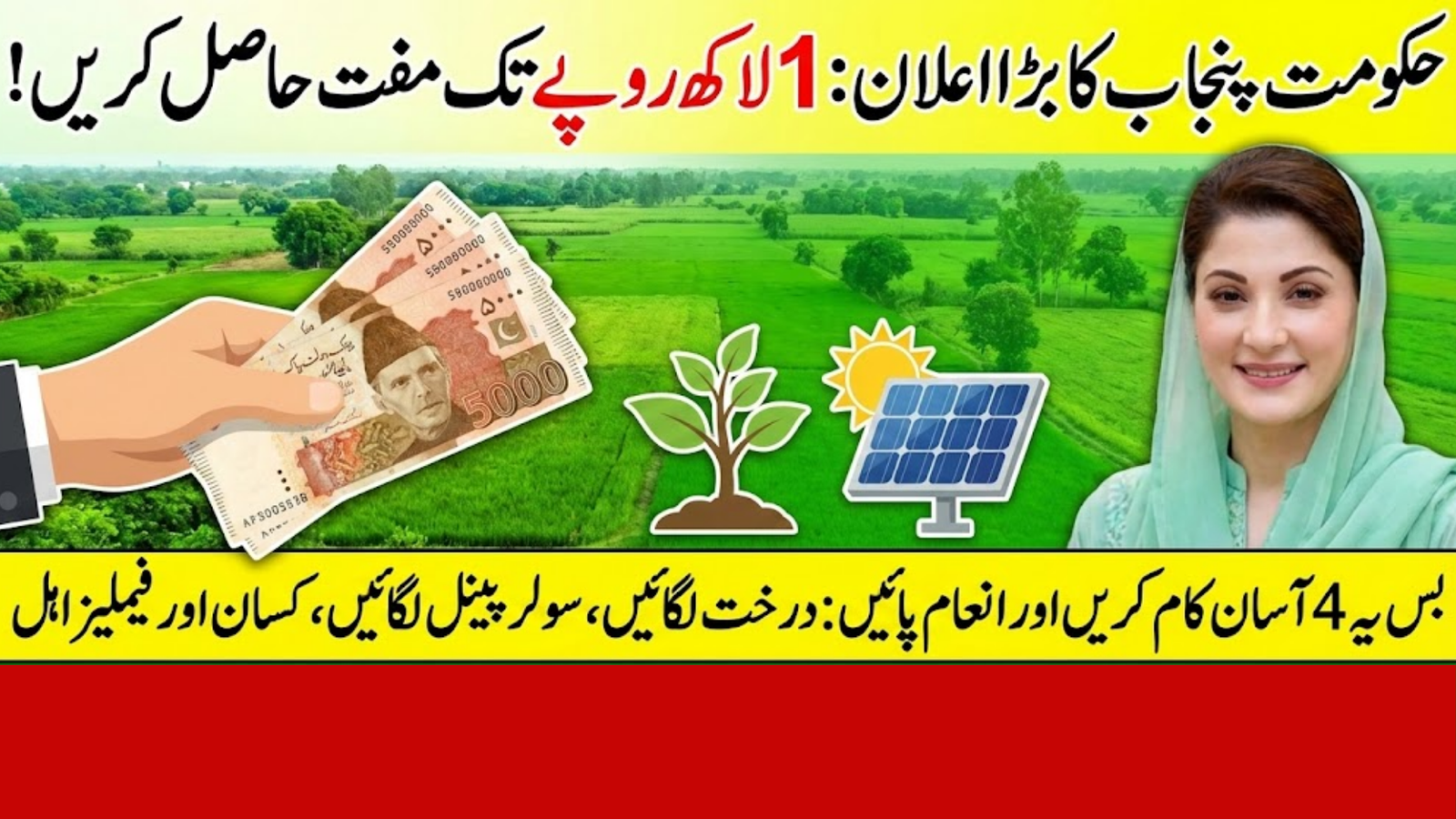
Green Credit Program
Green Credit Program Punjab is standing at a critical point where environmental damage is no longer a future threat but a daily reality. Smog-filled mornings, extreme heat in summers, sudden floods, and rising health issues have become part of normal life for millions of people. In cities and villages alike, polluted air, lack of trees, and poor waste management are silently affecting children, elders, and working families. As a journalist covering Punjab for years, I have seen how environmental neglect directly hits common citizens first, especially those who cannot afford private healthcare or alternative energy solutions.
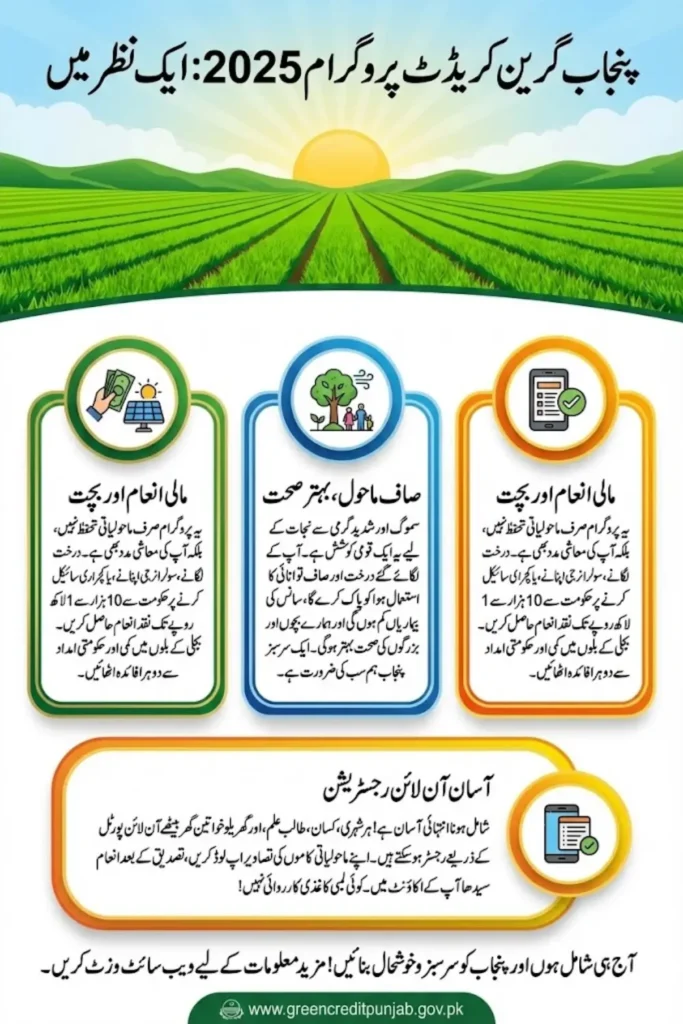
Keeping these realities in mind, the Punjab government has introduced the CM Punjab Green Credit Program 2026, a people-focused environmental initiative that combines awareness with financial incentives. Instead of just giving speeches about climate change, this program rewards citizens with real cash for real action. By planting trees, adopting solar energy, recycling waste, or practicing green farming, individuals can earn between Rs10,000 and Rs100,000, while contributing to a cleaner and healthier Punjab.
You Can Also Read: Acag.punjab.gov.pk Portal
Punjab’s Growing Environmental Crisis
Environmental pollution in Punjab has reached a level where it directly interferes with daily life. During winter, thick smog forces schools to close and hospitals to overflow with patients suffering from breathing problems. In summer, heatwaves claim lives, especially among laborers and farmers working in open fields. These conditions are not accidental; they are the result of years of unchecked pollution, rapid urbanization, and loss of green cover.
At the same time, climate change has increased the frequency of floods and irregular rainfall patterns. Farmers face crop losses, while urban areas struggle with drainage and waste disposal. These issues highlight one clear fact: environmental protection is no longer optional. Programs like the Green Credit initiative are necessary to involve citizens directly in fixing problems that affect everyone.
You Can Also Read: Winter Vacation in Punjab 2026 Notification
Understanding the Green Credit Initiative
The CM Punjab Green Credit Program 2026 is an incentive-based environmental scheme designed to encourage positive action instead of punishment. The idea behind it is simple and practical. If a citizen contributes to environmental protection in a measurable way, the government rewards that effort financially. This approach helps turn environmental responsibility into an opportunity rather than a burden.
What makes this program different is its wide scope. It is not limited to big companies or NGOs. Ordinary citizens, students, farmers, women, and local organizations can all take part. The program also supports Punjab Vision 2030 and global climate goals by promoting clean energy, sustainable agriculture, and community participation.
Goals and Long-Term Vision
The long-term vision of the Green Credit Program is to create a culture where protecting nature becomes a habit, not a one-time effort. Many people want to help the environment but feel their individual actions are too small to matter. This program sends a strong message that even small steps, when taken collectively, can lead to big change.
Another important goal is economic relief. With rising inflation and electricity costs, many households are struggling. By offering financial rewards for green actions, the program provides dual benefits. Citizens save money through solar energy or better farming methods, and they also receive cash incentives from the government, making sustainability financially attractive.
You Can Also Read: GTS Phase 3 Online Registration Portal
Who Can Apply for the Green Credit Program
The eligibility criteria have been kept simple so that maximum citizens can participate without confusion or unnecessary barriers. The program focuses on inclusivity and transparency to ensure fairness.
Eligible applicants include:
- Permanent residents of Punjab
- Individuals with a valid CNIC
- Students from educational institutions
- Women managing household or community-level initiatives
- Farmers using sustainable agricultural practices
- Registered organizations and community groups
Applicants must provide proof of their environmental activity, such as photographs or verification from local authorities, to ensure that rewards reach genuine contributors.
Environment-Friendly Activities That Qualify
The Green Credit Program recognizes activities that have a direct and visible impact on the environment. These actions are practical and already familiar to most people in Punjab, making participation easier.
Approved activities include:
- Tree plantation in homes, schools, streets, or agricultural land
- Installation of solar panels for residential or commercial use
- Waste recycling and organized waste management projects
- Adoption of eco-friendly farming techniques that reduce chemical use
These activities not only improve environmental conditions but also spread awareness within local communities.
You Can Also Read: Ration Card Punjab Online Check 2026
Reward Structure and Earning Potential
One of the strongest attractions of this program is its flexible reward system. The amount of money awarded depends on the type, scale, and impact of the activity performed. This allows both small households and larger community projects to benefit fairly.
| Activity Category | Estimated Reward Range (PKR) |
|---|---|
| Plantation of 50–100 trees | Rs10,000 – Rs25,000 |
| Household solar energy installation | Rs30,000 – Rs60,000 |
| Large-scale tree plantation projects | Rs50,000 – Rs100,000 |
| Recycling and waste management initiatives | Rs15,000 – Rs40,000 |
This structure motivates individuals, families, and organizations to scale up their environmental efforts.
Step-by-Step Online Registration Process
The registration process has been made fully online to reduce paperwork and long visits to government offices. Anyone with a mobile phone or computer and internet access can apply from home.
The registration process includes:
- Visiting the official Green Credit Program portal
- Creating an account using CNIC, mobile number, and email
- Selecting the relevant environmental activity category
- Uploading required documents and photographic evidence
- Submitting the application for review and verification
After submission, applicants can track the status of their application through the portal.
Verification and Approval System
Once an application is submitted, it is forwarded to the concerned Union Council or local authority for verification. This step ensures transparency and prevents misuse of public funds. Authorities verify the provided documents and may conduct physical checks if required.
If the application meets all criteria, green credits are approved, and the applicant becomes eligible for payment. In case of missing information, applicants are informed so they can correct their submission.
You Can Also Read: 13500 Start For Eligible Women By Ehsaas Program
Payment Method and Credit Transfer
After approval, the reward amount is transferred through the official payment system directly to the applicant. This direct transfer method minimizes delays and ensures accountability. Applicants are notified once the payment process is completed, which builds trust in the system.
Social, Health, and Economic Benefits
The impact of the Green Credit Program goes far beyond financial rewards. Cleaner air reduces health problems, while increased tree cover helps control temperature and improve water retention. Solar energy reduces electricity bills, and sustainable farming improves soil quality and crop yields.
Key benefits include:
- Reduced air and environmental pollution
- Improved public health and lower medical expenses
- Financial support for families and farmers
- Empowerment of youth and women through participation
- Stronger community involvement in environmental protection
Final Thoughts
The CM Punjab Green Credit Program 2026 is a practical and forward-thinking initiative that connects environmental protection with economic support. Instead of treating climate action as a government-only responsibility, it invites every citizen to play an active role. This approach is more realistic and effective, especially in a province as diverse and populous as Punjab.
For students, farmers, women, and organizations, this program offers a chance to contribute to a cleaner environment while earning financial rewards. By participating today, citizens are not only helping themselves but also securing a healthier and more sustainable future for coming generations