
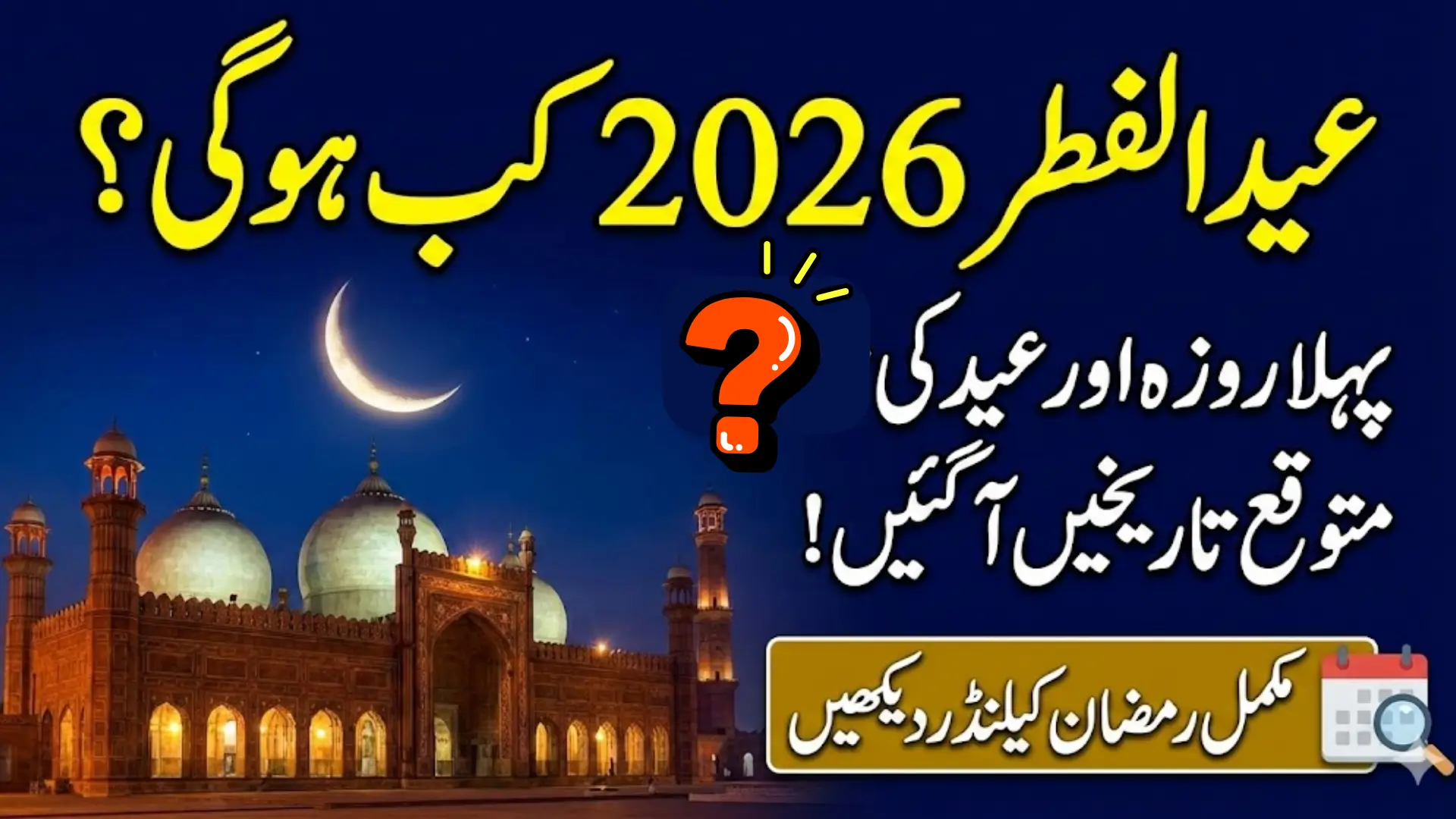
Eid Ul Fitr 2026 Date
Eid Ul Fitr 2026 Date As the Islamic year moves closer to Ramadan, one question starts appearing everywhere in Pakistan — on social media, in tea stalls, and inside homes: Eid kab hogi? Eid ul Fitr 2026 is not just a religious date; it is an emotional and social milestone for millions of Pakistanis who wait all year for this blessed occasion. After a full month of fasting, prayer, patience, and sacrifice, Eid becomes a symbol of relief, happiness, and unity.
In Pakistan, Eid planning begins early. Families manage budgets, arrange travel to hometowns, plan charity, and prepare children for the joy that comes after Ramadan. That is why knowing the expected Eid ul Fitr 2026 date in Pakistan, along with the full Ramadan calendar, is important for ordinary citizens, office workers, students, and daily wage earners alike.
You Can Also Read: Govt Punjab Announced New Nighban Relief
Moon Sighting System in Pakistan: How Dates Are Decided
Unlike fixed Gregorian calendars, Islamic months in Pakistan officially begin with moon sighting. The Ruet-e-Hilal Committee is responsible for confirming the start of Ramadan and Eid ul Fitr after reviewing moon sighting reports from different regions of the country. This process ensures religious correctness but also creates uncertainty until the final announcement.
Many people get confused because social media often spreads unverified dates. In reality, predictions are based on lunar calculations, but confirmation depends on physical sighting. This system has been followed for decades in Pakistan and remains the most trusted method.
Important points to understand:
- Moon sighting is announced after Maghrib prayer
- Astronomical predictions are not final
- Official confirmation comes from the central committee
- Regional sightings are carefully reviewed
You Can Also Read: 9999 Web Portal Launched for Ramzan Relief Package
Expected Start of Ramadan 2026 in Pakistan
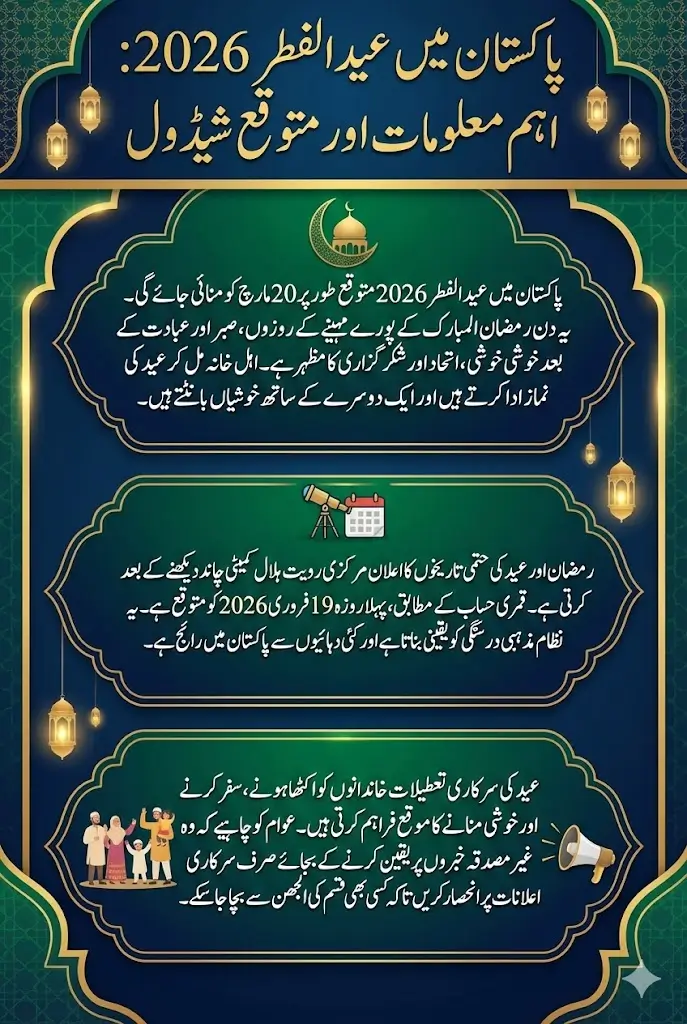
Based on lunar predictions, Ramadan 2026 is expected to begin on the evening of Wednesday, 18 February 2026. If the moon is sighted on that evening, the first fast (Roza) will be observed on Thursday, 19 February 2026 across Pakistan.
This period marks a visible change in daily life. Offices adjust working hours, schools reduce workload, and markets begin opening late in the evening. In cities and villages alike, people slowly shift toward a Ramadan routine, focusing more on worship, patience, and helping others.
Complete Ramadan 2026 Timeline at a Glance
Ramadan usually lasts 29 or 30 days depending on moon sighting. According to current expectations, Ramadan 2026 is likely to end on Thursday, 19 March 2026, followed by Eid ul Fitr the next day.
Below is a simple table that helps readers quickly understand the full Ramadan and Eid timeline without confusion:
You Can Also Read: BISP 8171 Online Registration (نئی رجسٹریشن کا اغاز)
| Event | Expected Date | Day |
|---|---|---|
| Ramadan Begins | 18 February 2026 (Evening) | Wednesday |
| First Roza | 19 February 2026 | Thursday |
| Last Roza | 19 March 2026 | Thursday |
| Eid ul Fitr | 20 March 2026 | Friday |
All dates depend on official moon sighting.
Eid ul Fitr 2026 Expected Date in Pakistan
If Ramadan completes 29 days, Eid ul Fitr 2026 in Pakistan is expected on Friday, 20 March 2026. This day represents the reward for patience and discipline shown during Ramadan. Early in the morning, people head toward Eid prayer grounds wearing clean or new clothes, greeting each other with smiles and prayers.
For Pakistani families, Eid is deeply connected to emotions. Children wait eagerly for Eidi, elders pray for peace, and households prepare special meals. It is also a day when differences are forgotten, and relationships are renewed.
You Can Also Read: How To Check Ehsaas Taleemi Wazaif Registration
Chand Raat 2026: The Night Before Eid
Chand Raat begins the moment the Shawwal moon is officially announced. In Pakistan, this night carries a festive energy that cannot be explained easily. Streets remain crowded till midnight, especially in women’s markets and shopping areas.
On Chand Raat, people usually:
- Apply mehndi and buy bangles
- Complete last-minute shopping
- Prepare Eid clothes and gifts
- Share sweets with neighbors
This night connects cultural joy with religious happiness, making it one of the most loved traditions in Pakistan.
You Can Also Read: Good News: Benazir Taleemi Wazaif
Sehri and Iftar Planning During Ramadan 2026
Sehri and Iftar are not just meals; they are family moments. In most Pakistani homes, Sehri is kept simple but filling, while Iftar becomes a time when families sit together after a long day of fasting.
Common Sehri and Iftar habits include:
- Light but energy-rich Sehri foods
- Dates and water for breaking fast
- Home-cooked meals instead of heavy eating
- Avoiding waste and sharing food
Mosques and welfare groups also arrange collective Iftar, especially for travelers and needy people.
Religious Practices Observed Throughout Ramadan
Ramadan strengthens spiritual discipline. Along with fasting, Muslims focus on improving behavior, controlling anger, and helping others. In Pakistan, mosques remain full during Taraweeh prayers, and Quran recitation becomes a daily routine.
Key practices observed include:
- Regular five daily prayers
- Taraweeh prayers at night
- Reading or listening to the Quran
- Giving Zakat, Sadaqah, and Fitrana
This month teaches patience, humility, and gratitude, especially in difficult economic conditions.
Social Life and Markets During Ramadan and Eid Season
Ramadan changes the rhythm of Pakistani society. Daytime remains calm, while evenings become active. Markets stay open till late night, especially during the last ten days of Ramadan, when Eid shopping reaches its peak.
Tailors face heavy workload, transport becomes crowded, and families from cities travel back to villages. Despite inflation, people try their best to celebrate Eid with dignity and happiness.
You Can Also Read: Student Benazir Taleemi Wazaif 3000 Installment
Eid ul Fitr Prayer and Sunnah Practices
Eid day begins early. After Fajr prayer, people prepare for Eid prayer, usually held in open grounds or mosques. Giving Fitrana before Eid prayer is compulsory so that the poor can also celebrate Eid with respect.
Sunnah practices followed on Eid include:
- Bathing before Eid prayer
- Wearing clean or new clothes
- Eating something sweet before prayer
- Meeting relatives and neighbors
These practices promote unity and kindness.
Public Holidays and Expected Eid Holidays 2026
The Government of Pakistan usually announces two to three public holidays for Eid ul Fitr. Since Eid is expected on Friday in 2026, there is a strong chance of a long weekend, especially for office workers and students.
These holidays allow families to travel, rest, and spend quality time together after Ramadan.
You Can Also Read: Nighban Program Get a Free Ramadan Relief
Common Mistakes People Make About Ramadan and Eid Dates
Many people trust viral messages and unofficial calendars, which often leads to confusion. Some even plan travel or weddings without waiting for confirmation.
Mistakes to avoid:
- Believing unverified WhatsApp forwards
- Assuming fixed Gregorian dates
- Ignoring official moon sighting announcements
Always rely on authentic sources.
How to Stay Updated for Official Eid ul Fitr 2026 Confirmation
To stay informed, Pakistanis should follow:
- Ruet-e-Hilal Committee announcements
- Government notifications
- Mosque loudspeaker announcements
- Trusted national news channels
These sources provide accurate and timely information.
You Can Also Read: All information about the Mahfooz Punjab Program
Final Thoughts
Ramadan and Eid are not only about fasting and celebration; they are about becoming better human beings. As Eid ul Fitr 2026 in Pakistan approaches, preparation should focus on faith, patience, and helping others.
May this Ramadan bring peace to homes, relief to hearts, and unity to the nation, and may Eid become a source of happiness for every Pakistani family.