
E-Taxi Scheme 2026 Registration
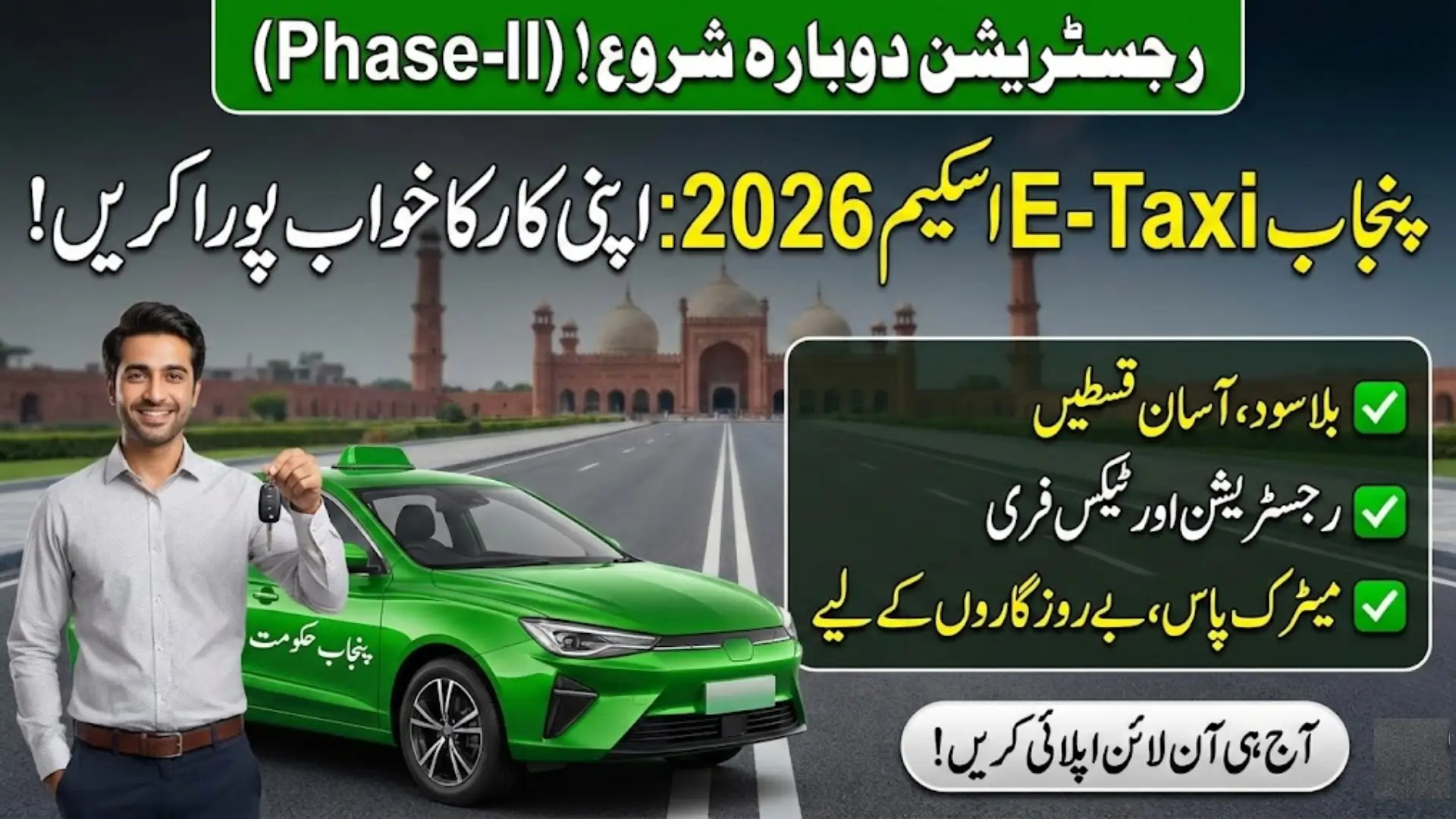
E-Taxi Scheme 2026 reopening of registration for the Punjab Green E-Taxi Scheme 2026 Phase II has once again brought hope for thousands of unemployed Pakistanis who are searching for a stable and respectable source of income. After the response received in the first phase, the Punjab government decided to reopen registrations with improved policies, clearer eligibility rules, and better planning. From what can be seen on the ground, interest in this phase is even stronger, mainly because fuel prices are still high and job opportunities remain limited.
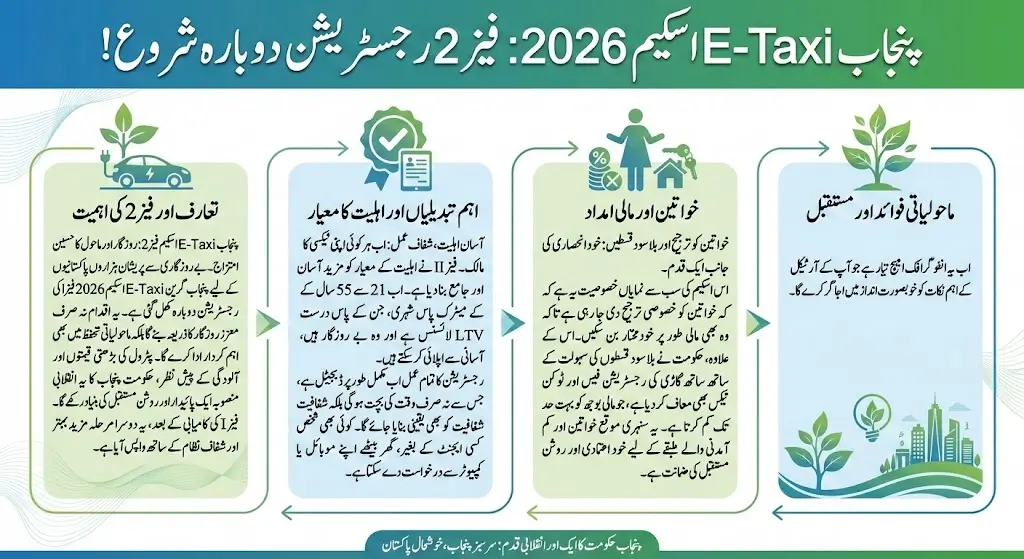
Phase II is not merely a repeat of the earlier phase. It reflects learning from public feedback, operational challenges, and practical issues faced by drivers. This time, the focus is more on genuine applicants, transparency in selection, and long-term sustainability. The scheme aims to provide electric taxis in a way that benefits both the driver and the environment, while also supporting Punjab’s broader clean transport vision.
You Can Also Read: BISP Q4 Payments 2026
What’s New in Phase II Registration 2026
Phase II registration introduces several important improvements that directly address concerns raised by applicants during the previous rollout. The government has worked on simplifying procedures and strengthening digital monitoring so that deserving individuals are not left behind due to technical or administrative issues. These changes show that the program is evolving rather than standing still.
Key updates introduced in Phase II include:
- More transparent online verification system
- Clear separation of individual and fleet applications
- Better scrutiny to reduce misuse
- Stronger coordination between departments
Overall, the new phase feels more structured and citizen-focused. Applicants now have clearer instructions and better guidance, which reduces confusion and unnecessary delays.
You Can Also Read: CM Punjab Bike Scheme Registration
Revised Eligibility Rules for Phase II Applicants
Eligibility criteria have been refined to strike a balance between opportunity and responsibility. The aim is to ensure that electric taxis are allocated to people who are ready to work and can use the vehicle as a long-term earning tool. Compared to earlier stages, the updated criteria are easier to understand and more practical for ordinary citizens.
Applicants must meet the following conditions:
- Must be a permanent resident of Punjab
- Age should be between 21 and 55 years
- Minimum education requirement is Matric
- Must hold a valid LTV driving license
- Should be unemployed or without a stable income
These rules help ensure fairness while also maintaining safety standards on the road. Applicants who meet these requirements stand a stronger chance in Phase II.
You Can Also Read: Apni Zameen Apna Ghar Online Registration Via Portal – Complete
Special Inclusion Categories in the New Phase
One of the most positive developments in Phase II is the increased focus on inclusion. The government has openly acknowledged that economic opportunities must reach women and other underrepresented groups. This approach is visible in how applications are being categorized and reviewed.
Priority consideration is being given to:
- Women applicants seeking independent income
- Unemployed youth from low-income families
- Small transport operators
- Applicants with limited earning opportunities
This inclusive direction strengthens public trust and shows that the scheme is not limited to a single group or city.
You Can Also Read: 12 Class Date Sheet 2026 Punjab Board
Electric Taxi Allocation Strategy for Phase II
Vehicle allocation in Phase II has been planned with greater care to avoid earlier complaints. Instead of rushed distribution, the government intends to match vehicles with verified drivers who are genuinely prepared to operate them. This helps ensure that the taxis remain active and productive rather than being misused.
Allocation decisions are based on:
- Applicant verification status
- Category of application (individual or fleet)
- Urban transport needs
- Compliance with scheme conditions
This measured approach improves transparency and helps maintain the program’s credibility.
Updated Financial Model and Installment Structure
The interest-free installment system remains the backbone of the E-Taxi Scheme. In Phase II, the payment structure has been adjusted to reduce pressure on drivers during their initial working months. This change reflects an understanding of real-world earning patterns.
The financial relief package includes:
- Zero markup on installments
- No vehicle registration fee
- No token tax
- Government-backed subsidies
Below is a simplified overview of the financial framework:
| Feature | Details |
|---|---|
| Scheme Year | 2026 |
| Vehicle Type | Electric Taxi |
| Installment Plan | Interest-Free |
| Registration Charges | Government Covered |
| Token Tax | Fully Exempt |
| Ownership Model | Driver-Based Allocation |
This structure makes the scheme affordable even for applicants with limited savings.
You Can Also Read: PSO Petrol Price in Pakistan Today
Digital Registration Process for Phase II
The registration process is fully digital, which helps reduce agent involvement and unnecessary middlemen. Applicants can complete the entire process from home using a mobile phone or computer. This is especially helpful for people living outside major cities.
The process includes:
- Creating an account on the official portal
- Uploading CNIC, license, and education documents
- Selecting application category
- Submitting and tracking the application online
Applicants will receive updates through SMS and email, making the process easier to follow.
Role of Government Support in Phase II
Government support goes beyond vehicle delivery. Training and awareness programs are part of the scheme to ensure that drivers are confident and prepared before starting work. This support reduces early operational issues and improves safety.
Support areas include:
- EV driving and safety training
- Basic maintenance guidance
- Charging awareness
- Regulatory assistance
Such backing makes the scheme more than just a loan program; it becomes a full support system.
You Can Also Read: School Opening Date 2026 Exact Dates & Reopening Schedule
Why Phase II Is a Major Opportunity for Women Drivers
For many women in Punjab, Phase II represents a rare opportunity to earn independently without heavy financial risk. Reserved consideration and government-covered costs lower the entry barrier significantly.
Women drivers benefit from:
- Reduced startup expenses
- Government-backed credibility
- Safer operational environment
- Long-term income potential
This approach supports genuine empowerment rather than symbolic inclusion.
Environmental and Economic Impact of Phase II Expansion
Electric taxis directly address two major issues faced by Punjab’s cities: unemployment and pollution. Rising fuel costs have made conventional taxis expensive to operate, while air quality continues to deteriorate.
Expected benefits include:
- Reduced fuel dependency
- Lower emissions in urban areas
- More affordable daily transport
- Stable earnings for drivers
This combination of environmental and economic impact makes the scheme highly practical.
You Can Also Read: 7181 Ehsaas Program Registration Code
Expected Timeline and Official Updates
The government will announce timelines through official channels only. Applicants are advised to rely on verified notifications rather than unofficial sources.
Updates will be shared via:
- Official portal
- SMS alerts
- Government press releases
Staying informed helps applicants avoid mistakes.
Common Mistakes to Avoid During Phase II Registration
Many applications fail due to avoidable errors. Careful attention can significantly improve approval chances.
Common mistakes include:
- Uploading unclear documents
- Using expired licenses
- Entering incorrect CNIC details
- Selecting the wrong application category
Reviewing information before submission is essential.
You Can Also Read: 8171.bisp.Gov.Pk Ehsaas 8171 ویب پورٹل
What Comes After Selection in Phase II
Selection marks the beginning of responsibility. Successful applicants must complete verification and training before vehicle allocation.
Post-selection steps include:
- Final document verification
- Training completion
- Vehicle handover
- Installment activation
This ensures readiness before operations begin.
Future Expansion Plans Beyond Phase II
Officials have indicated that the E-Taxi initiative will continue expanding. Future phases may include more cities, charging stations, and private sector collaboration.
Long-term plans include:
- Expanded EV charging infrastructure
- Digital monitoring systems
- EV maintenance hubs
- Stronger public-private partnerships
This vision positions Punjab as a leader in clean transport.
You Can Also Read: PSER Registration Door-to-Door Survey
Conclusion
The reopening of E-Taxi Scheme 2026 Phase II registration is a meaningful step toward employment generation, cleaner cities, and inclusive growth. With improved eligibility rules, better financial support, and transparent systems, Phase II offers a real opportunity for deserving citizens.
For Pakistanis struggling with unemployment and rising costs, this scheme provides a practical path forward. Applying carefully and following official updates can help applicants benefit fully from this government initiative.