

BISP Instalment Update 2026 Q3 Payments
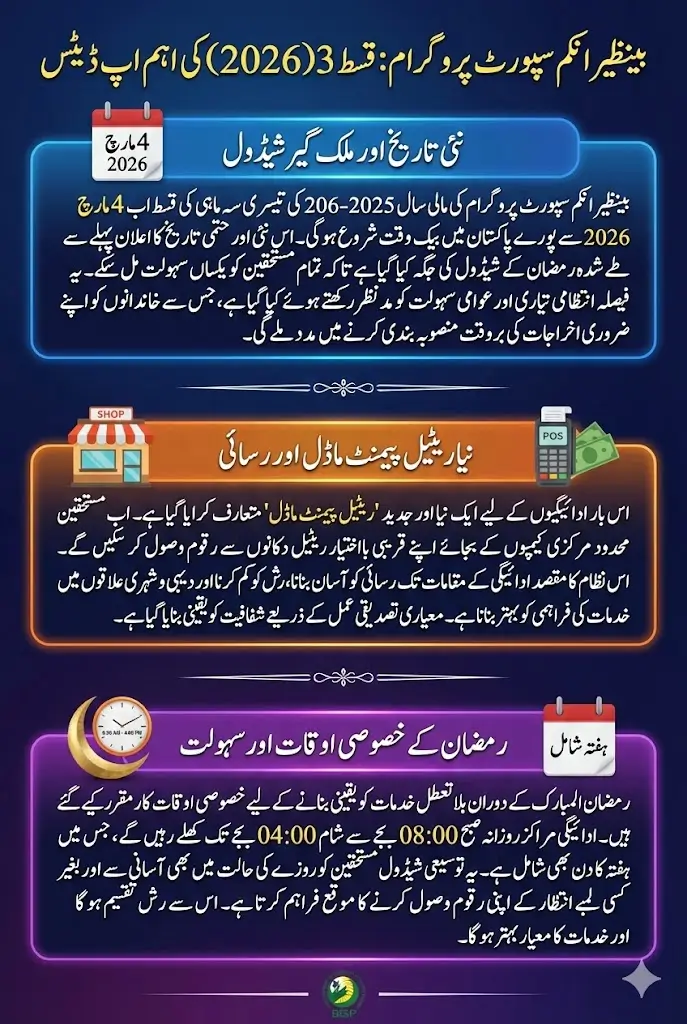
BISP Instalment Update 2026 Q3 Payments next instalment cycle under the Benazir Income Support Program has been officially rescheduled, bringing clarity for millions of beneficiaries across Pakistan. Authorities have confirmed that Q3 payments for the fiscal year 2025–26 will begin on 4 March 2026. Earlier planning had linked the rollout with the start of Ramadan, but the updated decision introduces a fixed calendar date to ensure smoother nationwide implementation.
From an on-ground perspective, a clear start date helps families plan essential expenses such as food, utilities, and school-related needs. In many communities, beneficiaries rely on this support for household stability. By announcing the revised timeline in advance, the administration aims to minimize confusion and prevent unnecessary travel to payment locations before services begin.
The updated schedule reflects an organized approach that aligns operational readiness with public convenience. Instead of a phased or uncertain launch, the programme will begin simultaneously across Pakistan, creating uniformity in payment delivery.
You Can Also Read: Dhee Rani Program 2026 Online Registration Phase 4
Key highlights of the revised schedule:
- Q3 instalment will start from 4 March 2026 nationwide
- Previous Ramadan-based timeline has been replaced
- Implementation applies to all provinces and regions
- The schedule is part of fiscal year 2025–26 planning
BISP Q3 Retail Payment Model Introduced for Nationwide Distribution
A major operational feature of this instalment cycle is the adoption of the retail payment model. This system shifts payment distribution from limited centralized camps to a broader network of authorized retail partners. Based on past experiences, expanding payment access points reduces congestion and improves service availability for rural and urban populations alike.
Under this approach, beneficiaries will visit designated outlets where verification and payment are completed through standardized procedures. The system is designed to bring services closer to communities, particularly in areas where travel to district centers is difficult or costly.
This distribution framework also strengthens monitoring and consistency. With a structured network in place, payment handling becomes more transparent, and beneficiaries experience a more predictable process when collecting funds.
You Can Also Read: CM Punjab Ramzan Nighban Program 10000 Qist Full Withdrawal
Core features of the retail distribution approach:
- Payments delivered through authorized retail outlets
- Standard verification procedures before disbursement
- Wider geographical coverage compared to previous methods
- Reduced crowd pressure at centralized payment sites
- Uniform implementation across Pakistan
Ramadan Operational Hours and Service Availability
Special working arrangements have been introduced to ensure uninterrupted payment services during Ramadan. According to the official plan, operations will run daily from 08:00 AM to 04:00 PM, allowing beneficiaries to collect payments during manageable daytime hours while observing fasting routines.
An important administrative decision is the continuation of services including Saturdays. In previous cycles, limited working days created backlogs and long queues. Extending operations throughout the week helps distribute visitor flow evenly and improves overall service efficiency.
From a practical standpoint, structured working hours provide certainty for families traveling from distant areas. When service windows remain consistent, beneficiaries can organize visits without repeated attempts or extended waiting periods.
You Can Also Read: PM Shahbaz Sharif Launches Ramadan Relief Package 2026
Operational arrangements during Ramadan include:
- Fixed service hours from morning to afternoon
- Saturday operations to maintain continuity
- Nationwide implementation of the same schedule
- Consistent payment availability throughout Ramadan
Administrative Coordination Behind the Updated Rollout
The revised implementation follows official correspondence issued on 9 February 2026, outlining the administrative framework for Q3 payment execution. Such coordination ensures that provincial authorities, retail partners, and local management teams operate under a single unified plan.
Preparation for a nationwide instalment cycle involves multiple layers of coordination. Payment systems must be verified, distribution points aligned with central guidelines, and public information communicated clearly. These preparations are essential for maintaining order and preventing delays that could affect vulnerable households.
From a governance perspective, structured planning reduces uncertainty at both institutional and community levels. When operational procedures are clearly defined, implementation becomes more efficient and beneficiaries receive services with fewer disruptions.
You Can Also Read: BISP 2026 Payment Change: New CNIC-Linked Violet Account
Administrative preparation focuses on:
- Central planning and provincial coordination
- Alignment of payment systems and service points
- Structured communication of schedules and procedures
- Organized nationwide rollout strategy
Beneficiary Preparation and Payment Collection Guidance
Individuals scheduled for the Q3 instalment should prepare for payment collection according to the announced timeline. Awareness about operational hours, verification requirements, and designated payment locations plays a critical role in ensuring a smooth experience.
In many regions, beneficiaries depend heavily on informal information sources. However, relying on unofficial updates can lead to confusion and repeated visits. Following the officially announced schedule helps families avoid unnecessary travel costs and waiting time.
Preparation also supports orderly service delivery. When beneficiaries arrive with required identification and clear understanding of procedures, the verification process becomes faster and more efficient.
Recommended preparation steps:
- Plan visit after the official start date of 4 March 2026
- Carry valid identification for verification
- Visit during announced service hours
- Follow designated retail payment locations
- Keep payment records safely after collection
You Can Also Read: Apna Khet Apna Rozgar Scheme Online Registration
Q3 Instalment Implementation Overview
The following summary provides a clear view of the updated operational framework for beneficiaries across Pakistan.
| Implementation Element | Official Details |
|---|---|
| Programme Phase | Q3 Fiscal Year 2025–26 |
| Payment Start Date | 4 March 2026 |
| Distribution Method | Retail Payment Model |
| Coverage | Nationwide Implementation |
| Ramadan Service Hours | 08:00 AM to 04:00 PM |
| Weekly Operations | Monday to Saturday |
Nationwide Rollout Aims to Improve Accessibility
The updated instalment framework reflects a broader effort to improve accessibility and service organization for beneficiaries across Pakistan. A fixed start date, expanded payment network, and Ramadan-adjusted operations together create a structured environment for financial assistance delivery.
From field observations, clarity in scheduling significantly reduces anxiety among families who rely on timely payments. When processes are predictable and well communicated, beneficiaries can focus on household needs rather than uncertainty about payment availability.
You Can Also Read: Ramadan Relief Expansion 2026 New Federal Cash Program